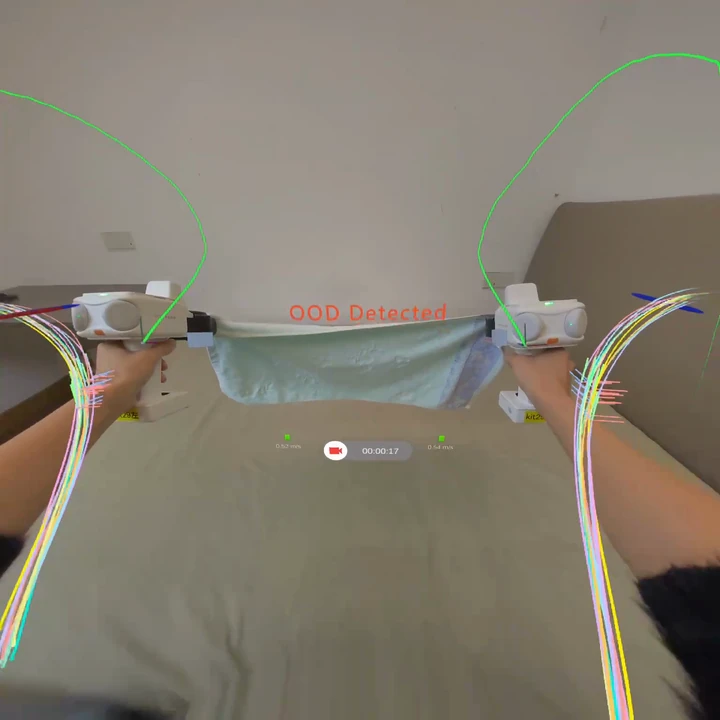
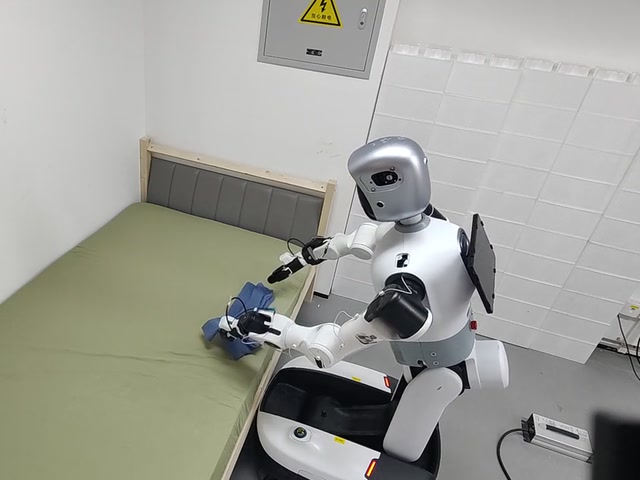
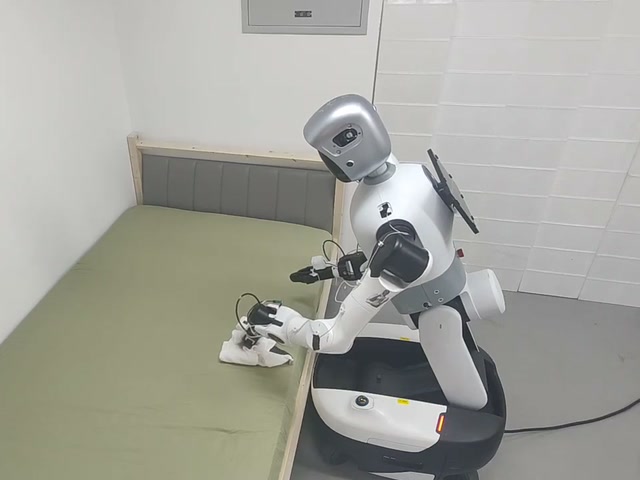
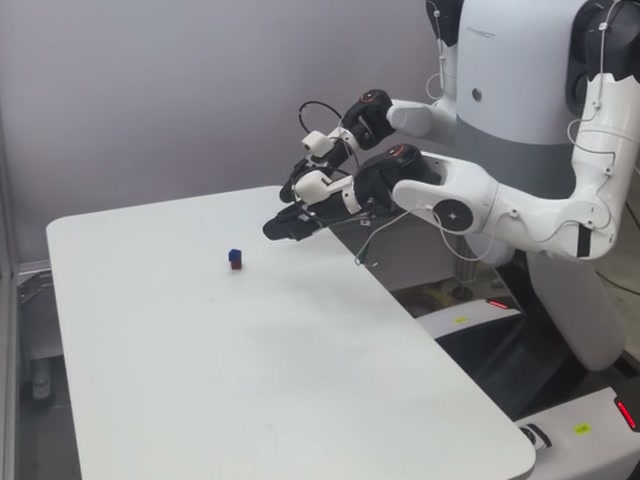
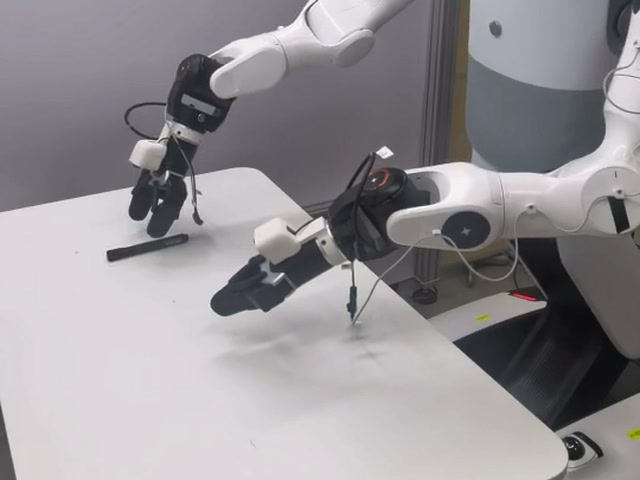
Folding clothes
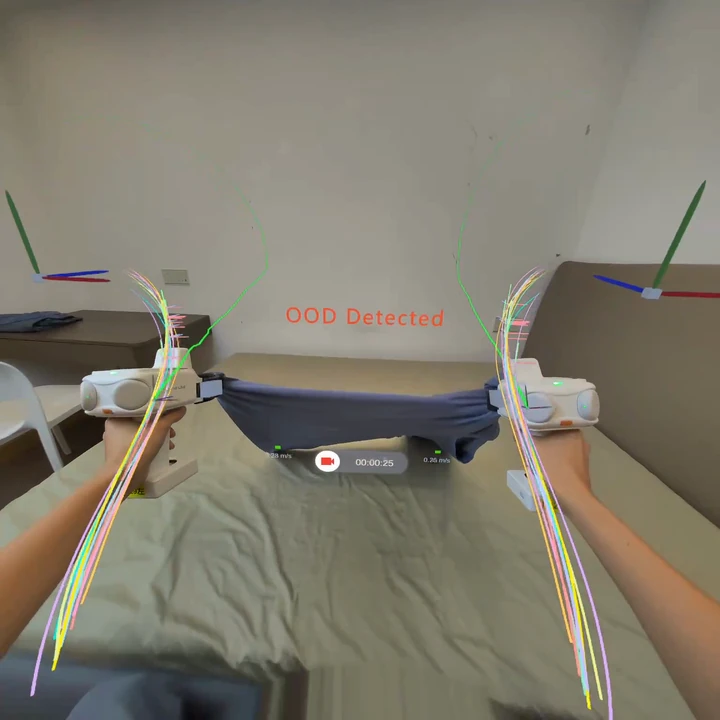
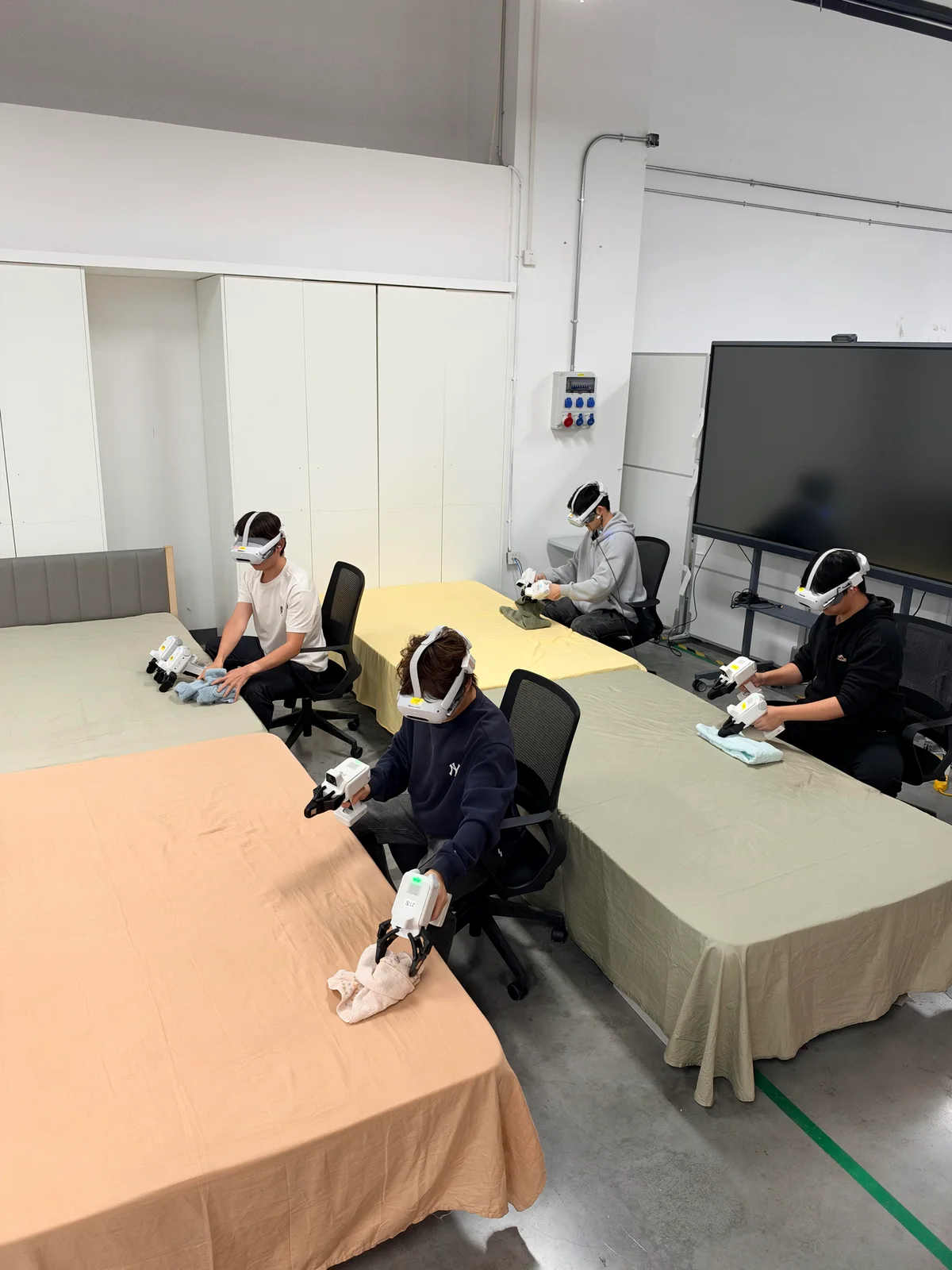
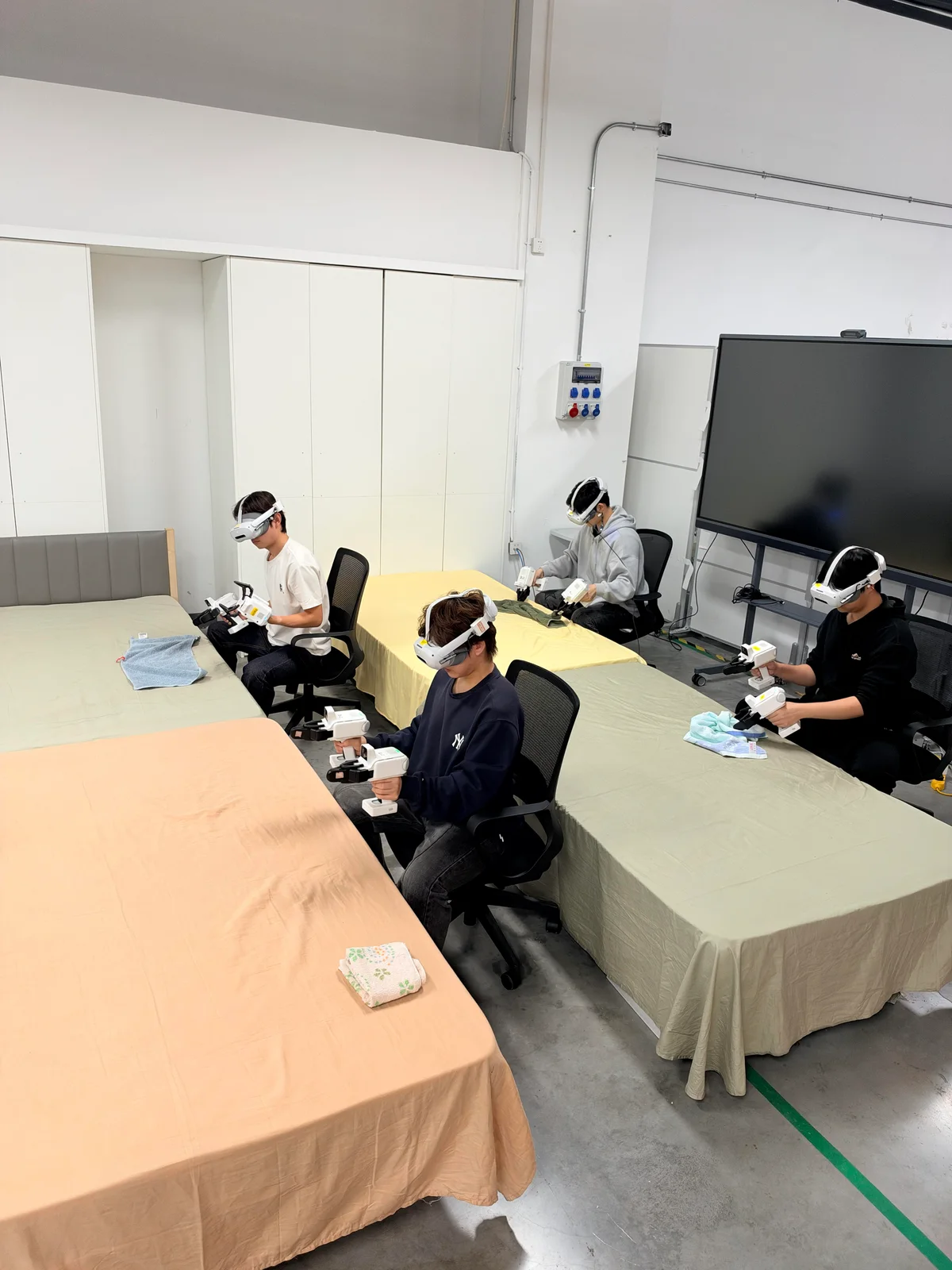
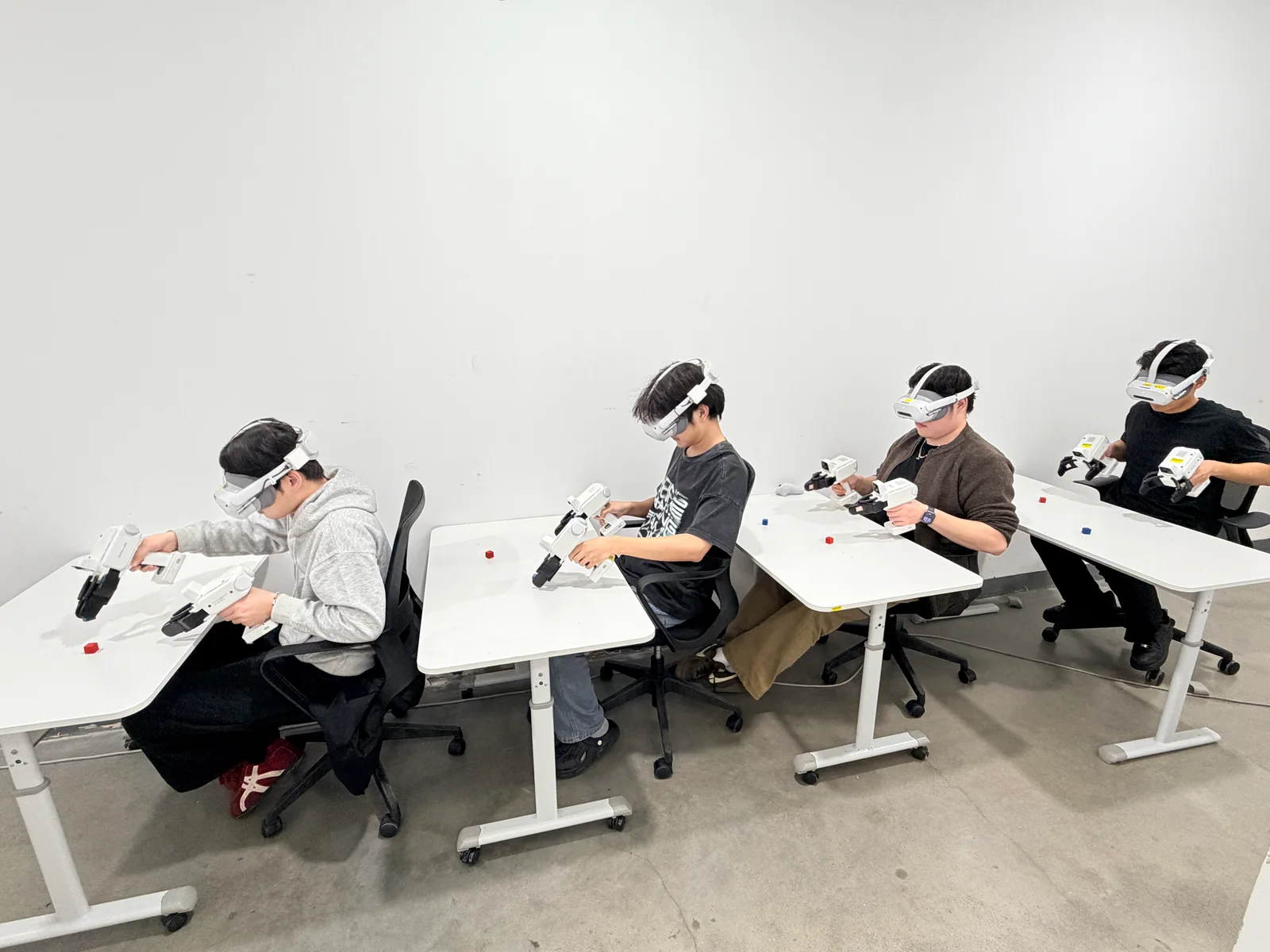
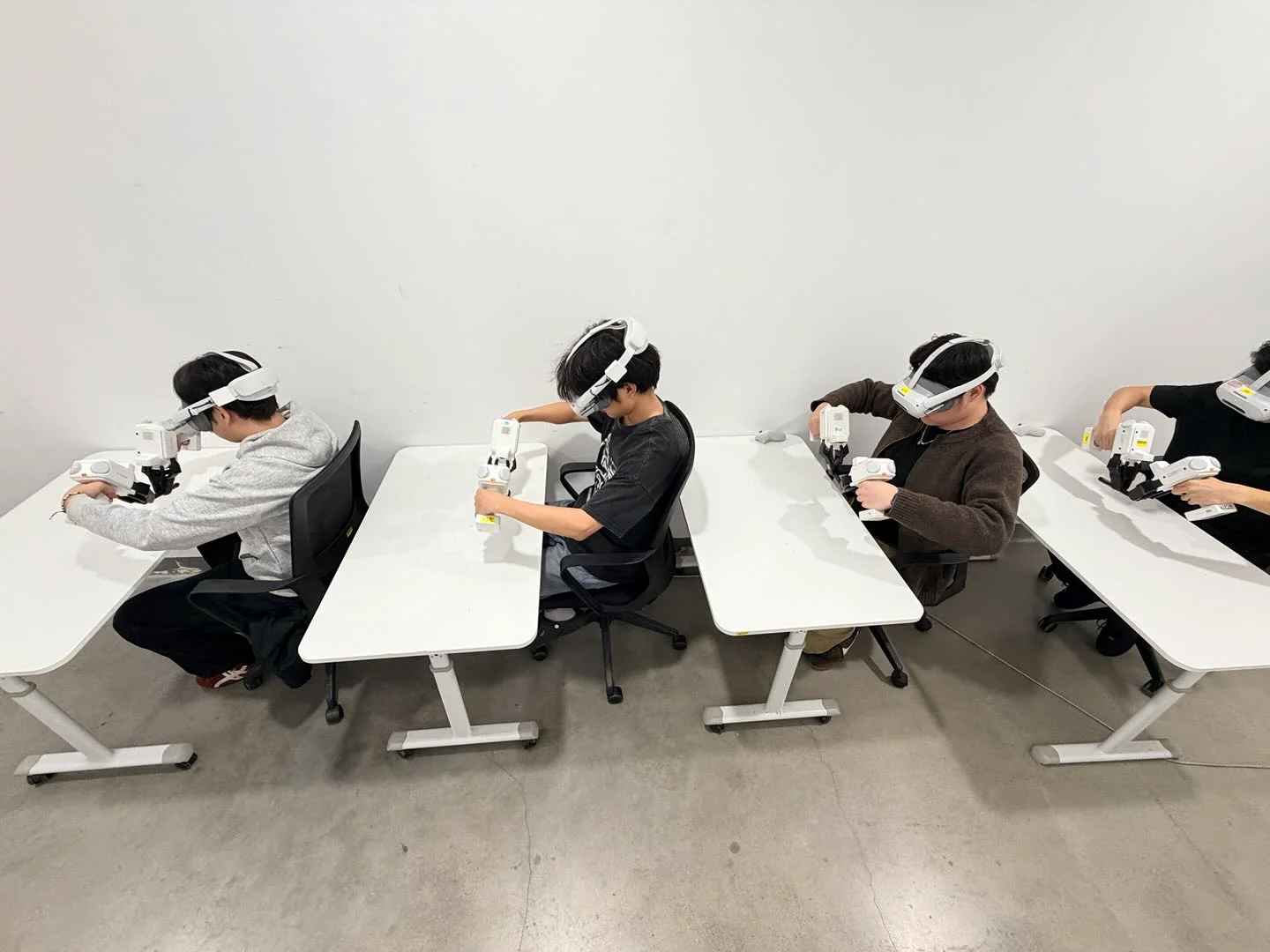
Parallel UMI collection
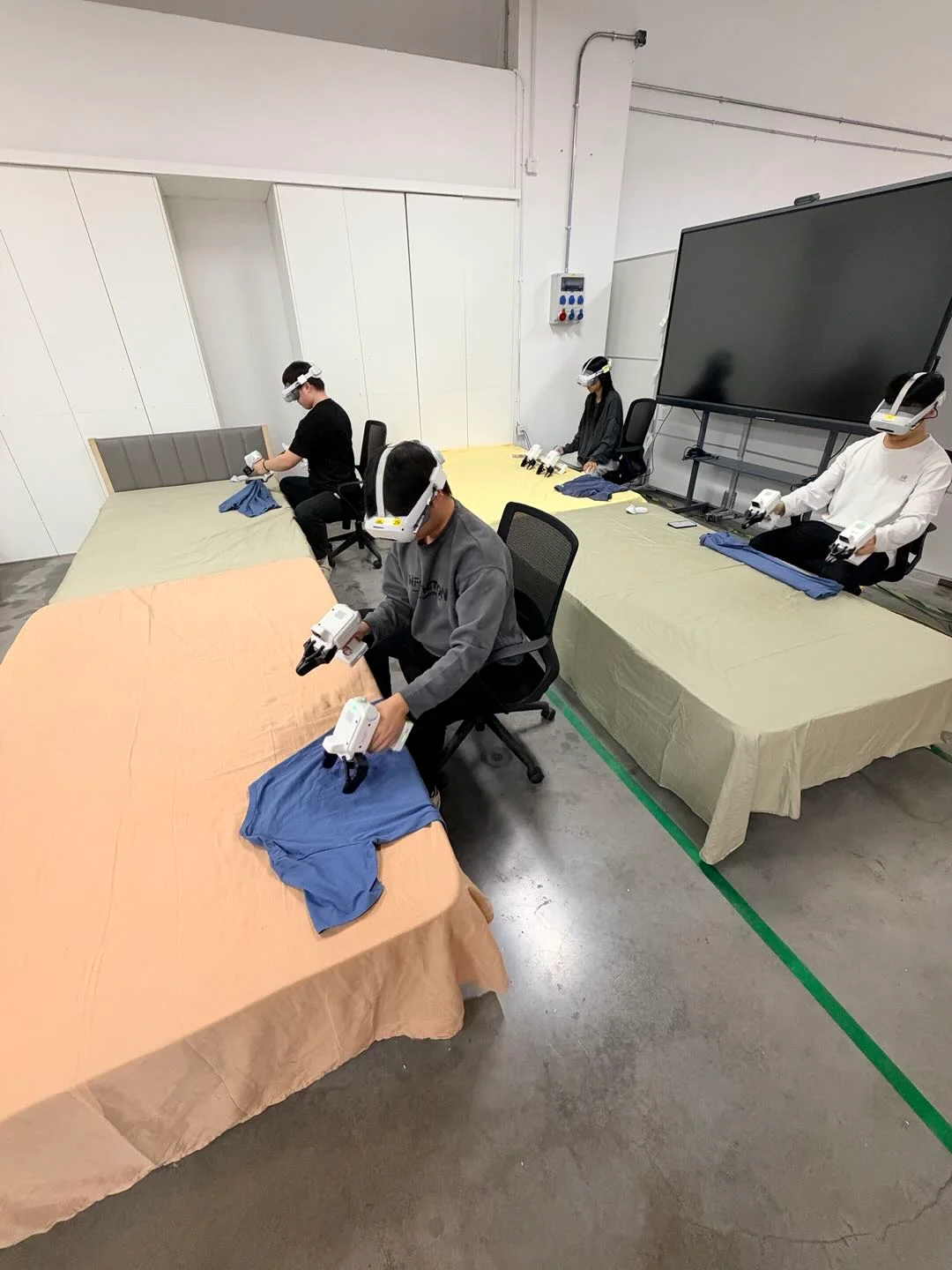
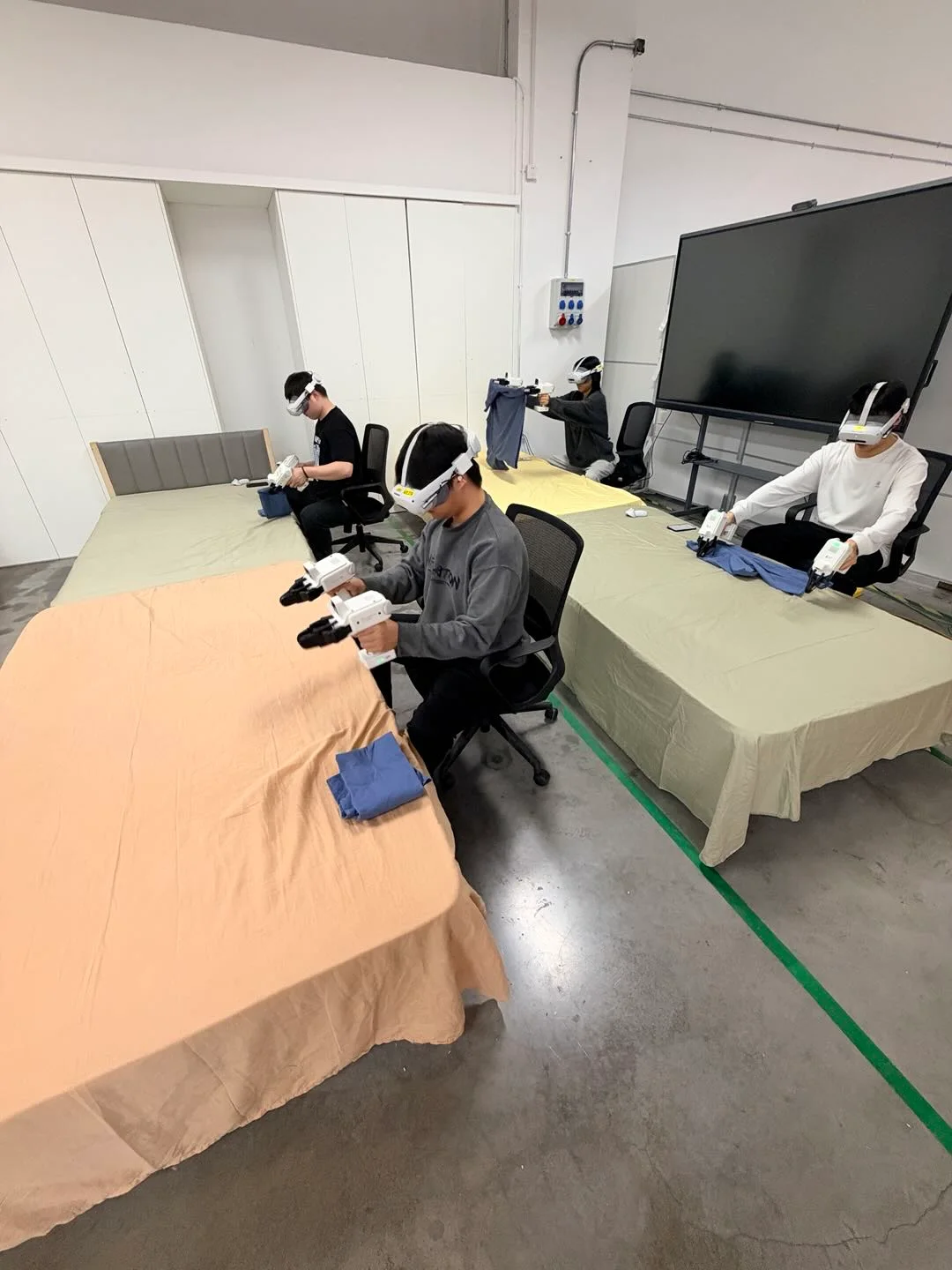
Adapting vision-language-action (VLA) models to a deployment requires demonstrations that cover the states the policy actually visits, yet robot-executed human-in-the-loop methods rely on costly physical policy rollouts. We present SteerUMI, a cloud-edge framework for robot-free, policy-guided post-training using distributed handheld Universal Manipulation Interface (UMI) devices. During collection, we take timestamp-aligned human–policy disagreement as a proxy for policy-specific challenging regions, referred to operationally as out-of-distribution (OOD) regions. Asynchronous evaluation provides feedback without pausing human collection, while augmented reality (AR) guidance encourages locally compatible corrective demonstrations. The collected data support automated DAgger-style iterative aggregation and policy updates. We evaluate five real-world dual-arm manipulation tasks using 2–8 devices per experiment within a deployment of over 50 UMI devices. With matched per-round episode counts, SteerUMI achieves a 28.6% mean relative improvement in final-round Task Progress Score (TPS) over conventional UMI collection, averaged across the five tasks. On stack cubes, it narrows the gap to real-robot HG-DAgger to 3.0 TPS points after three rounds, and with one additional round it achieves a higher final TPS in less collection time, reducing per-round collection time by 33.3% in our single-unit comparison.
01 / SteerUMI Collection
Scroll sideways to see all five tasks and their videos.
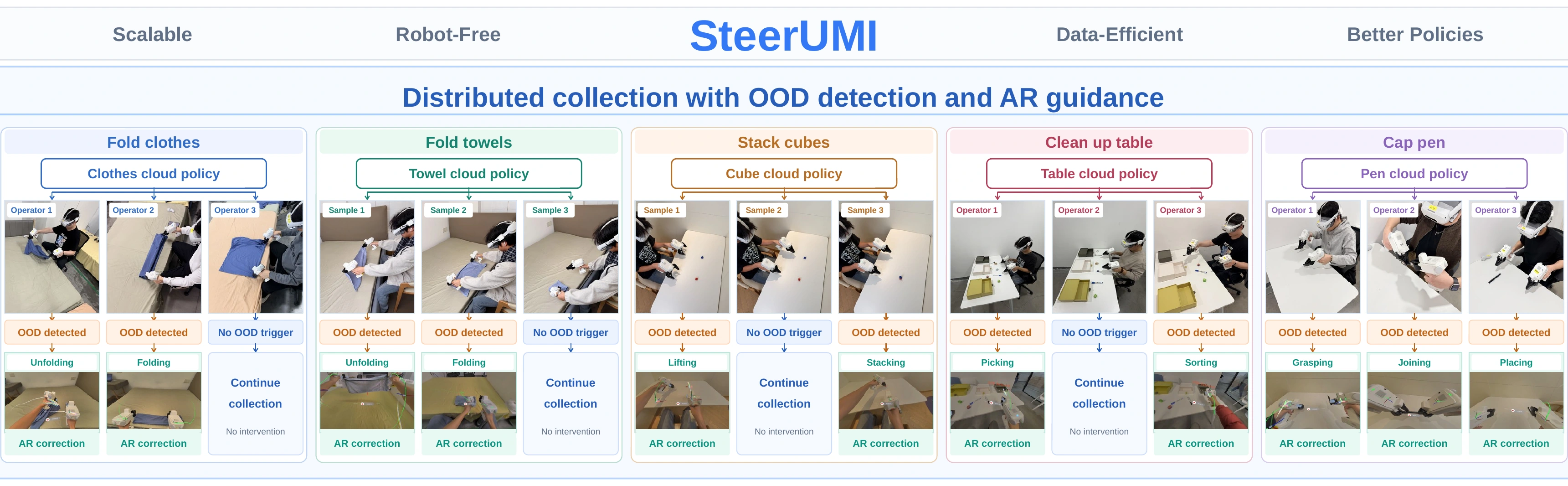
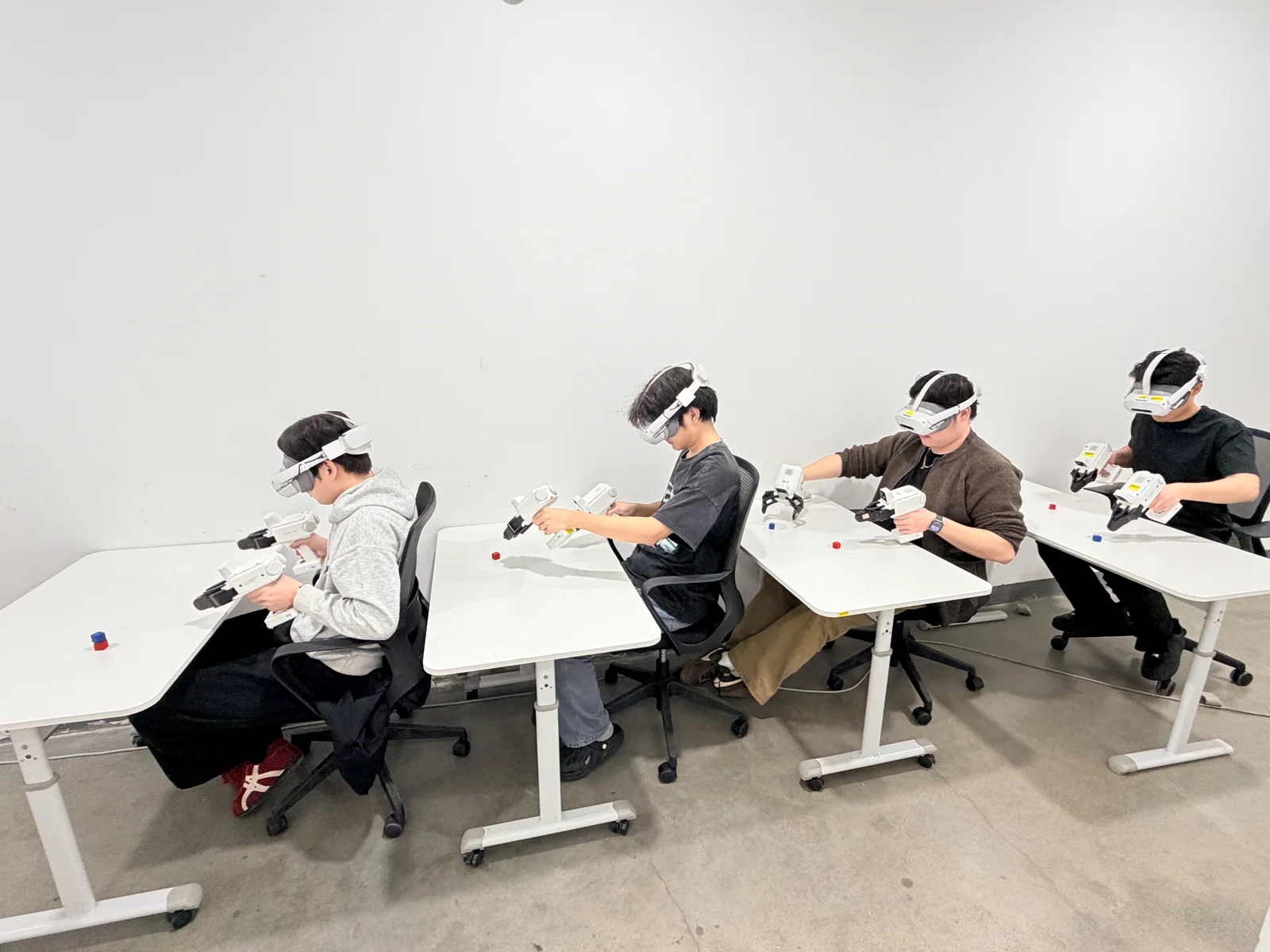
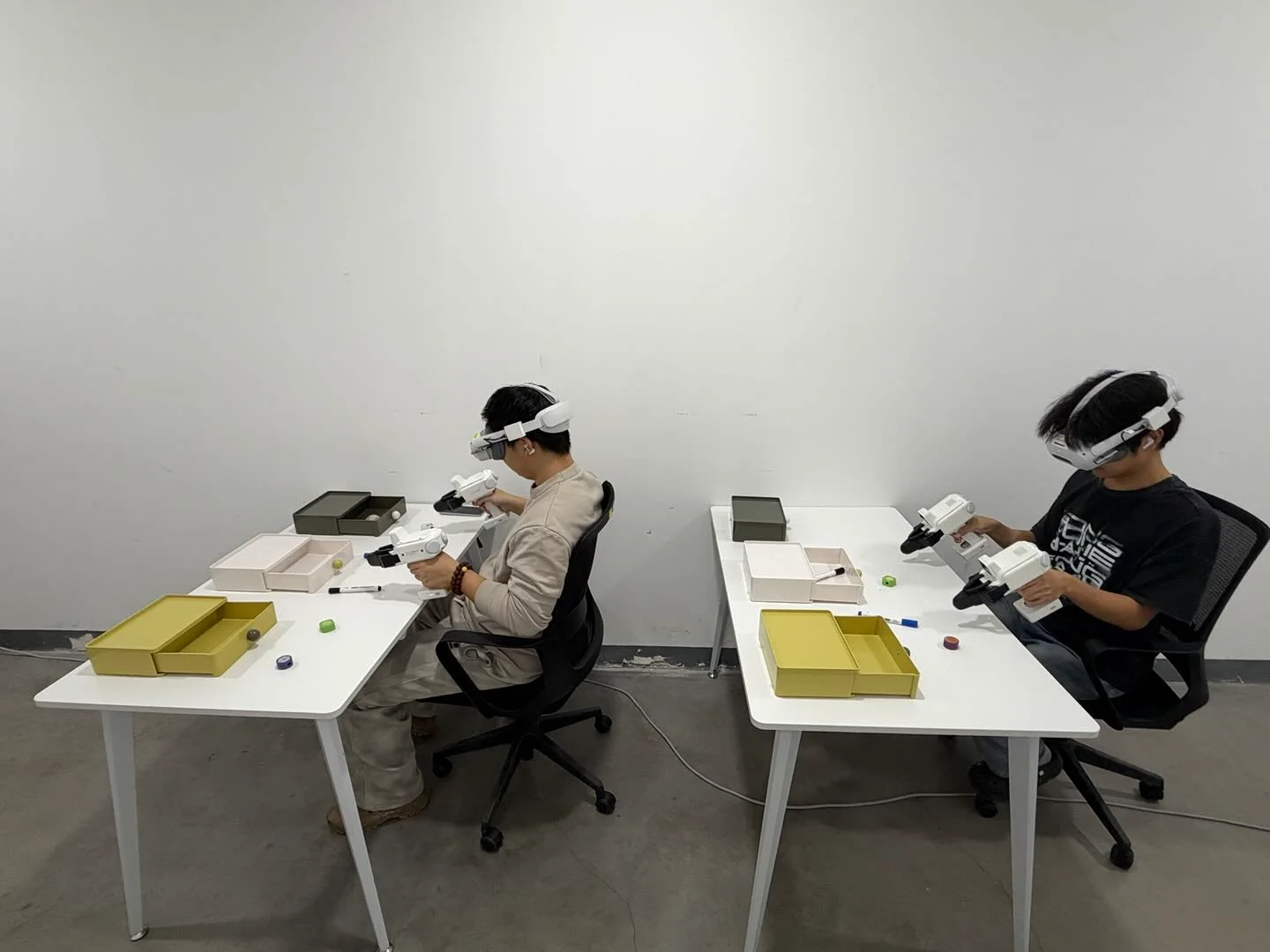
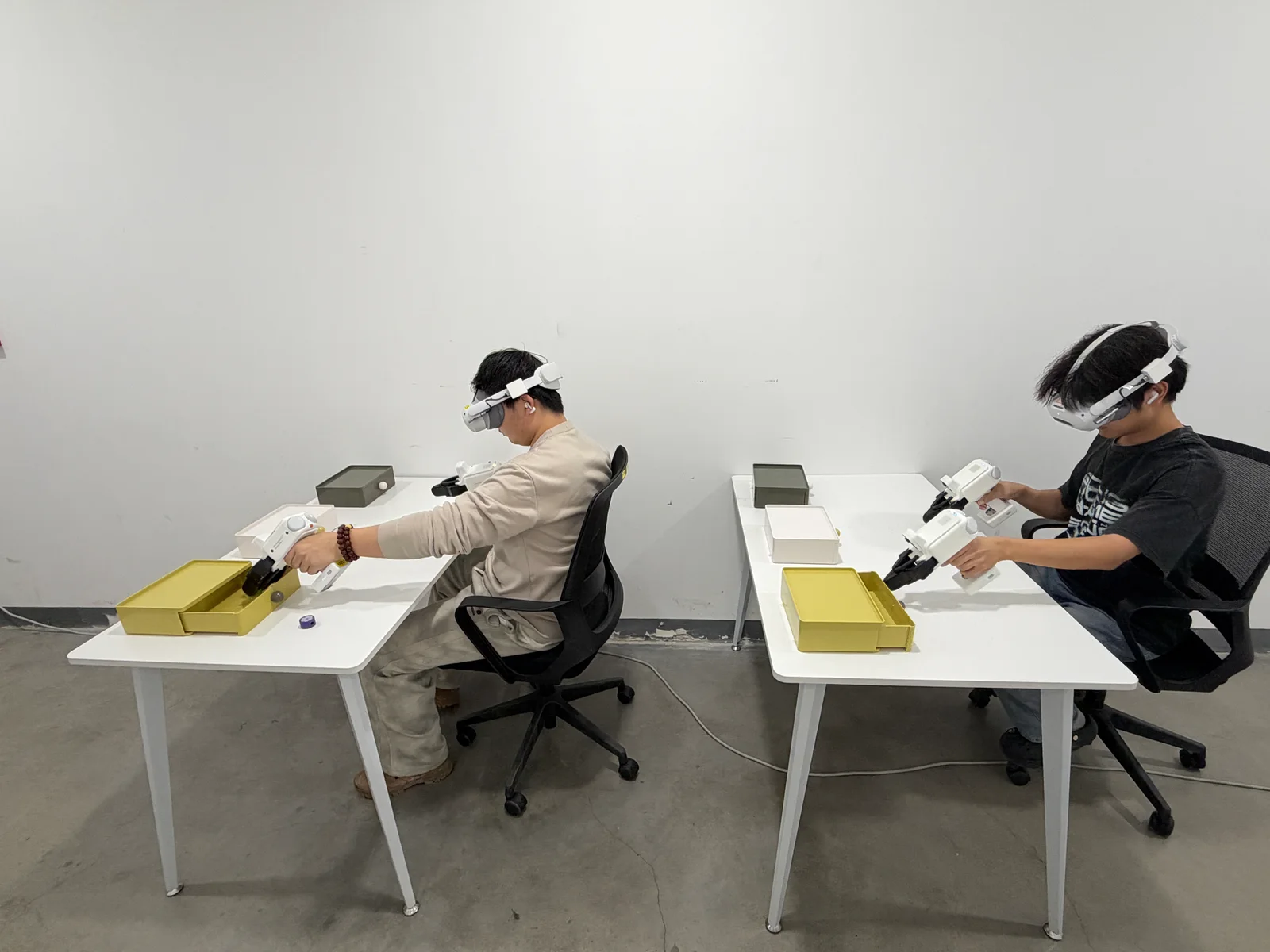
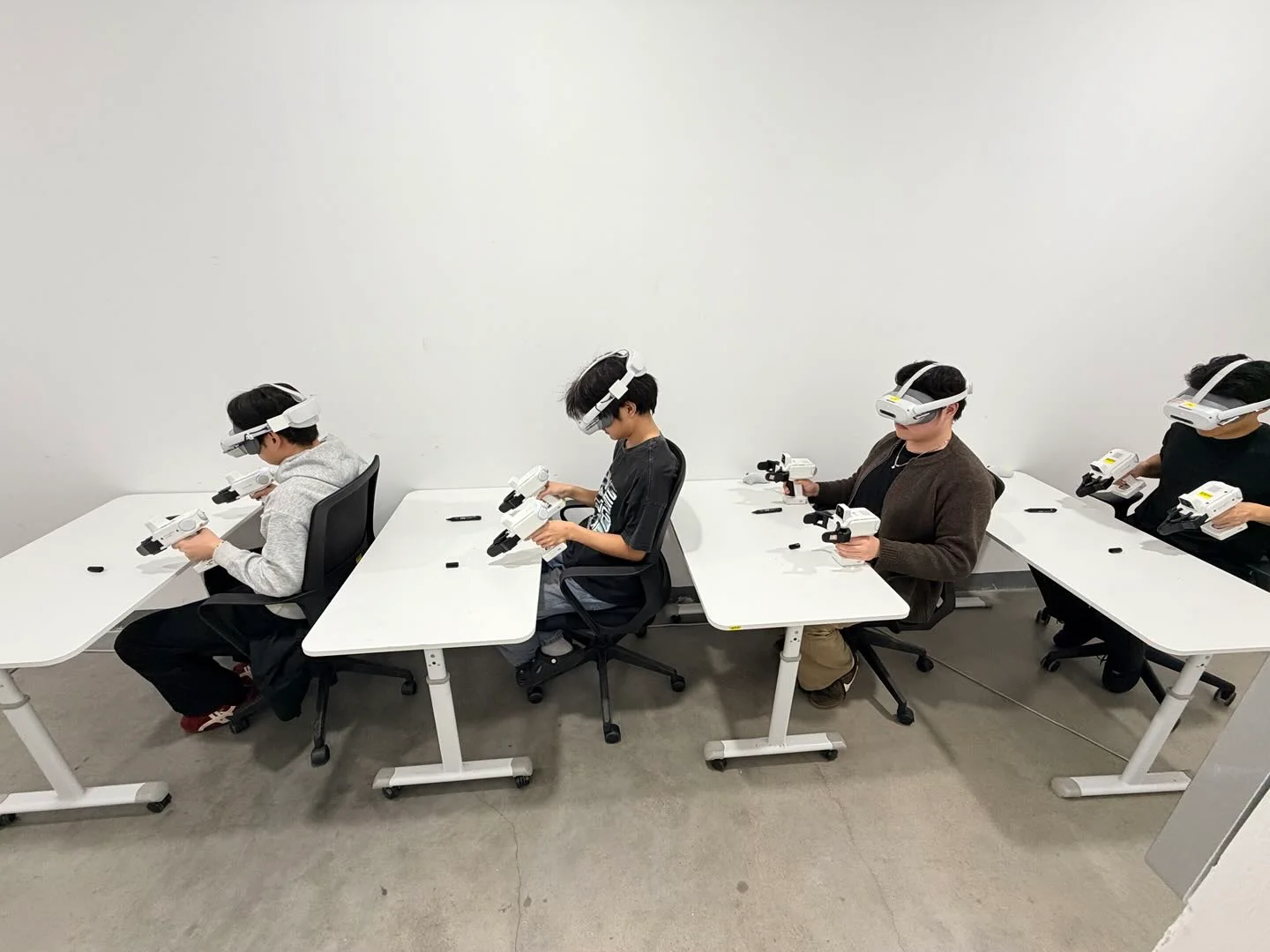
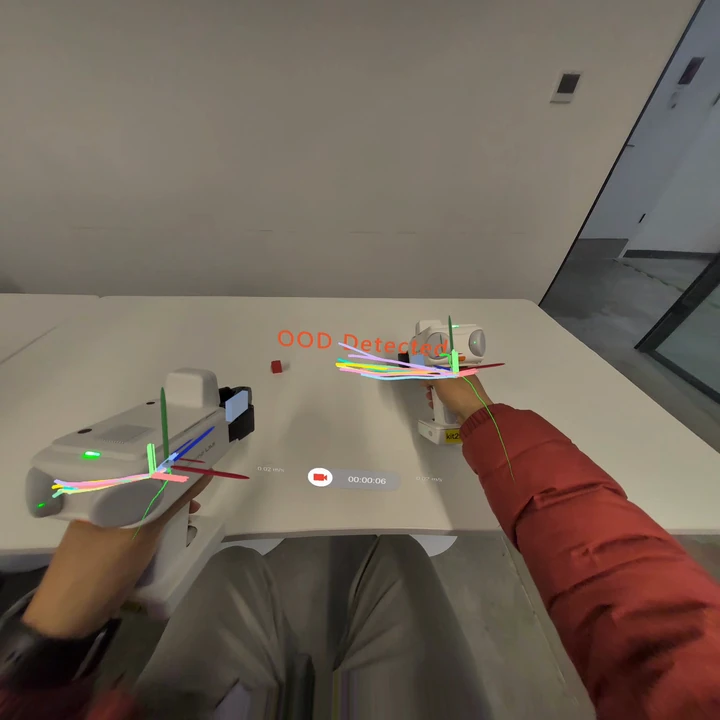
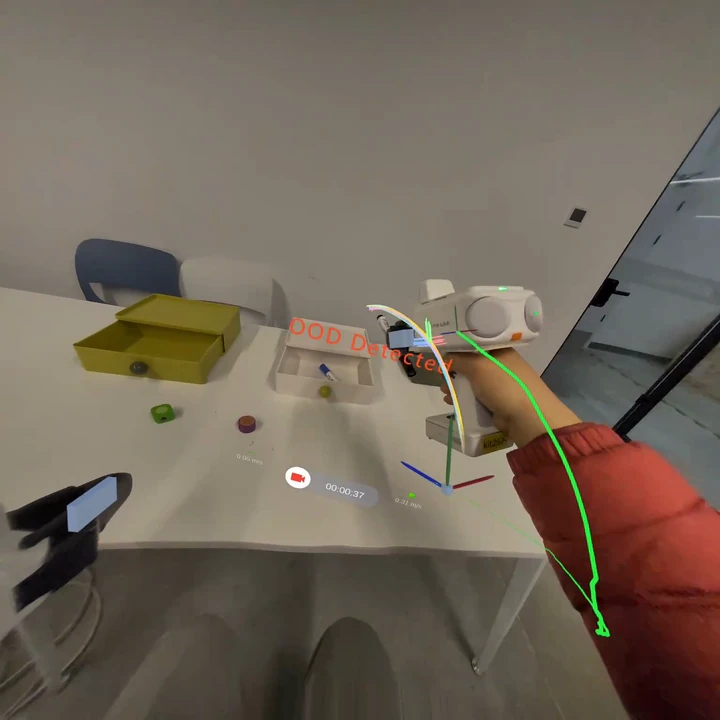
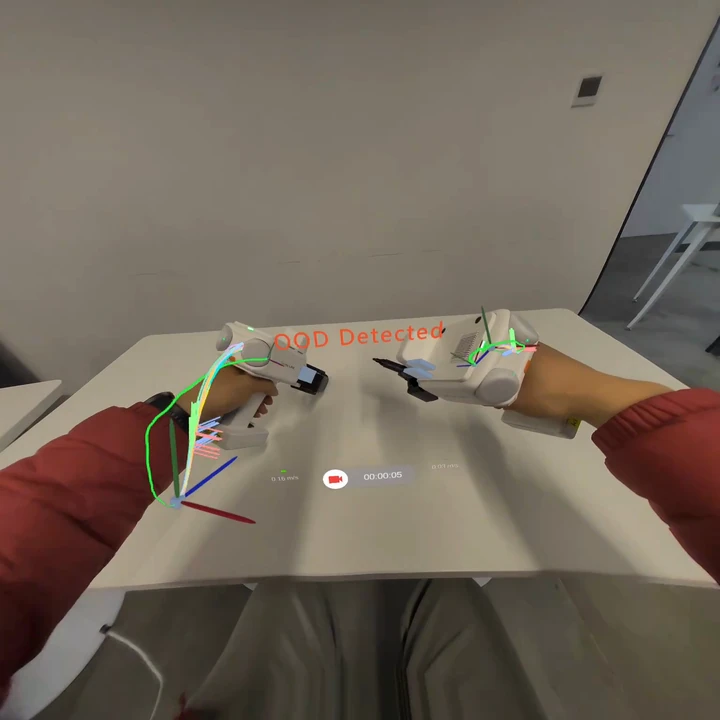
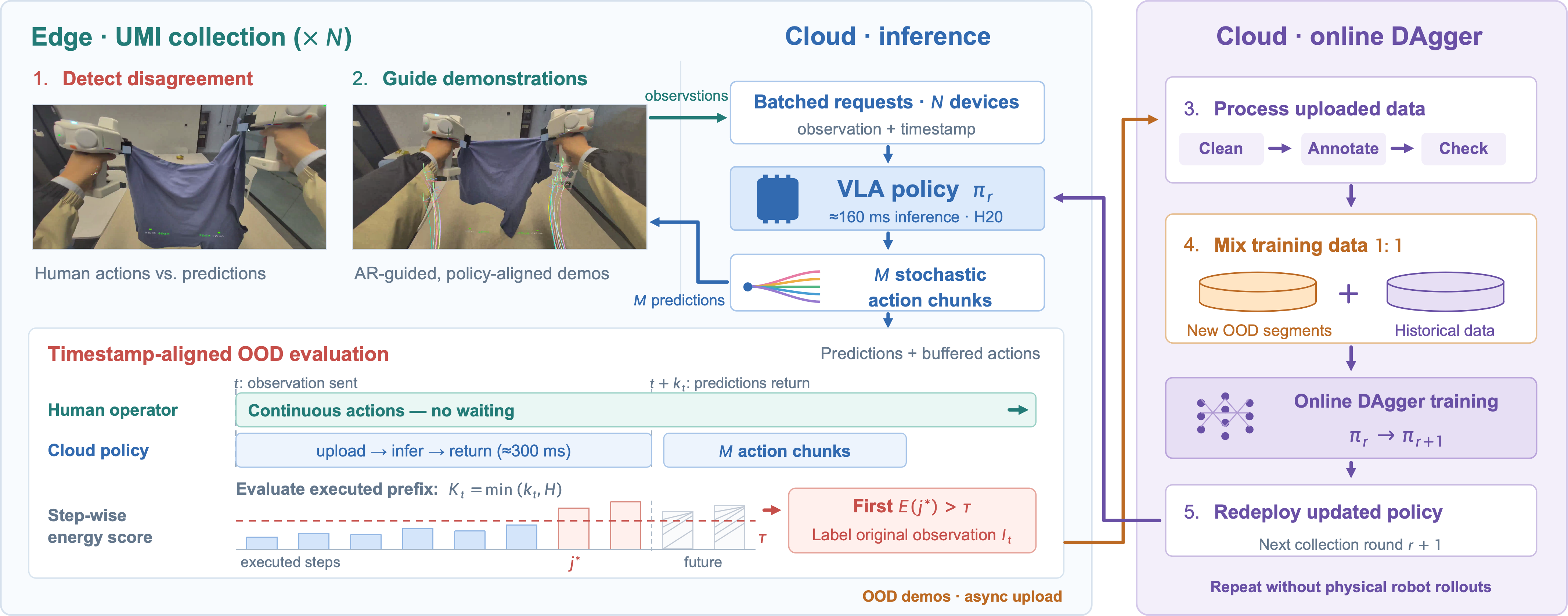
Identify the policy's weaknesses in real-time to enable targeted data collection.
Guide operators to collect policy-aligned demonstrations that address these weak spots.
02 / Automated Policy Iteration

Operators use multiple handheld UMI devices to gather demonstrations under the current policy.
Recordings upload asynchronously. The cloud cleans, annotates, and checks the data.
Once enough valid data is ready, the cloud starts the next policy update automatically.
The new checkpoint is deployed in the cloud, and the system publishes the next collection task.
03 / Experiments
Scroll to see all five tasks.
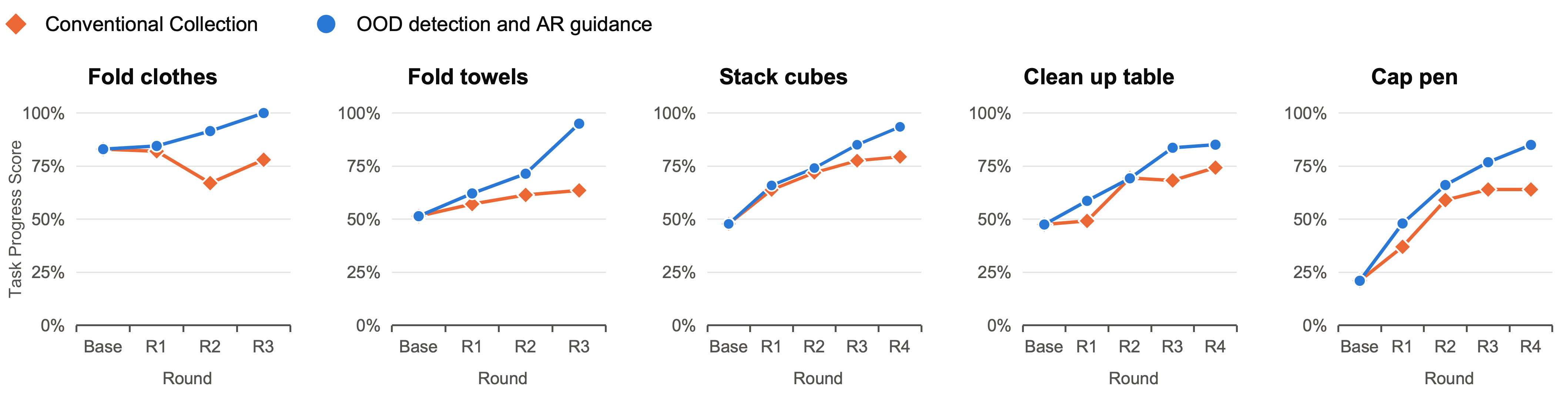
Both methods start from the same base policy and use the same number of training demonstrations per round. SteerUMI achieves an average improvement of 28.6% in final TPS across the five tasks.
| Task | Rounds | Conventional UMI | SteerUMI |
|---|---|---|---|
| Fold clothes | 3 | 0.78 | 1.00 |
| Fold towels | 3 | 0.64 | 0.95 |
| Stack cubes | 4 | 0.79 | 0.94 |
| Clean up table | 4 | 0.74 | 0.84 |
| Cap pen | 4 | 0.64 | 0.85 |
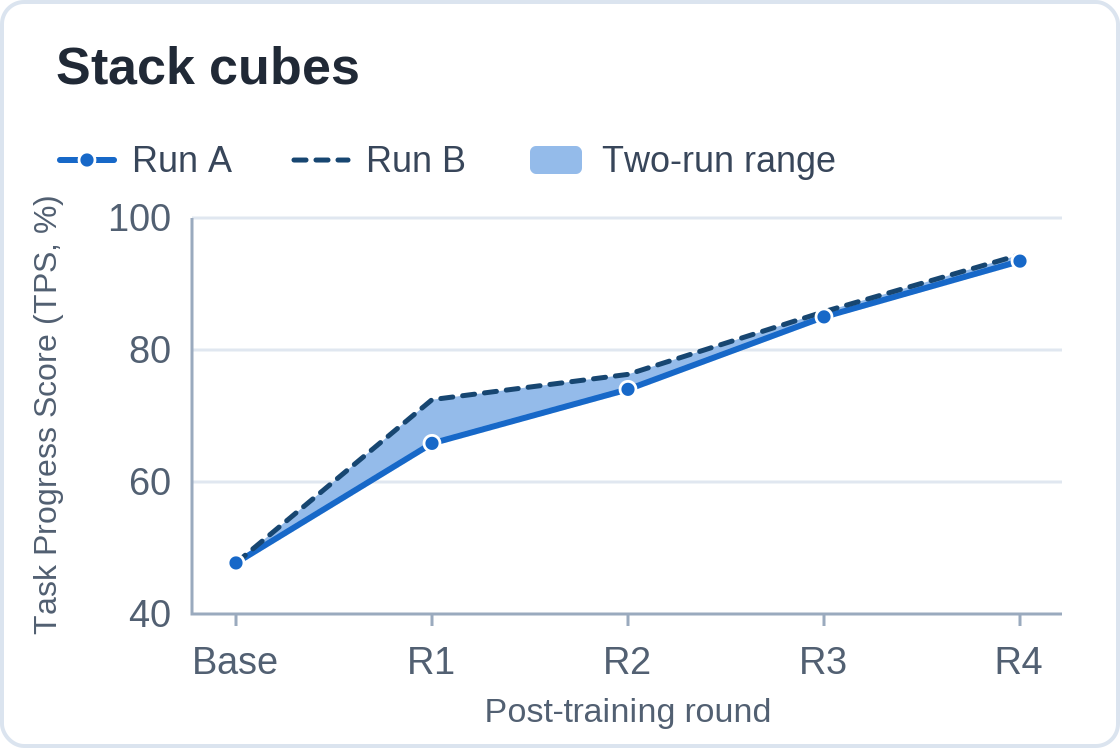
Both runs start from the same stack-cubes base policy and each completes four post-training rounds, with independently collected DAgger demonstrations at every round.
Both runs improve over the base policy and follow similar learning curves. The shaded area is the range of the two runs, not a confidence interval.
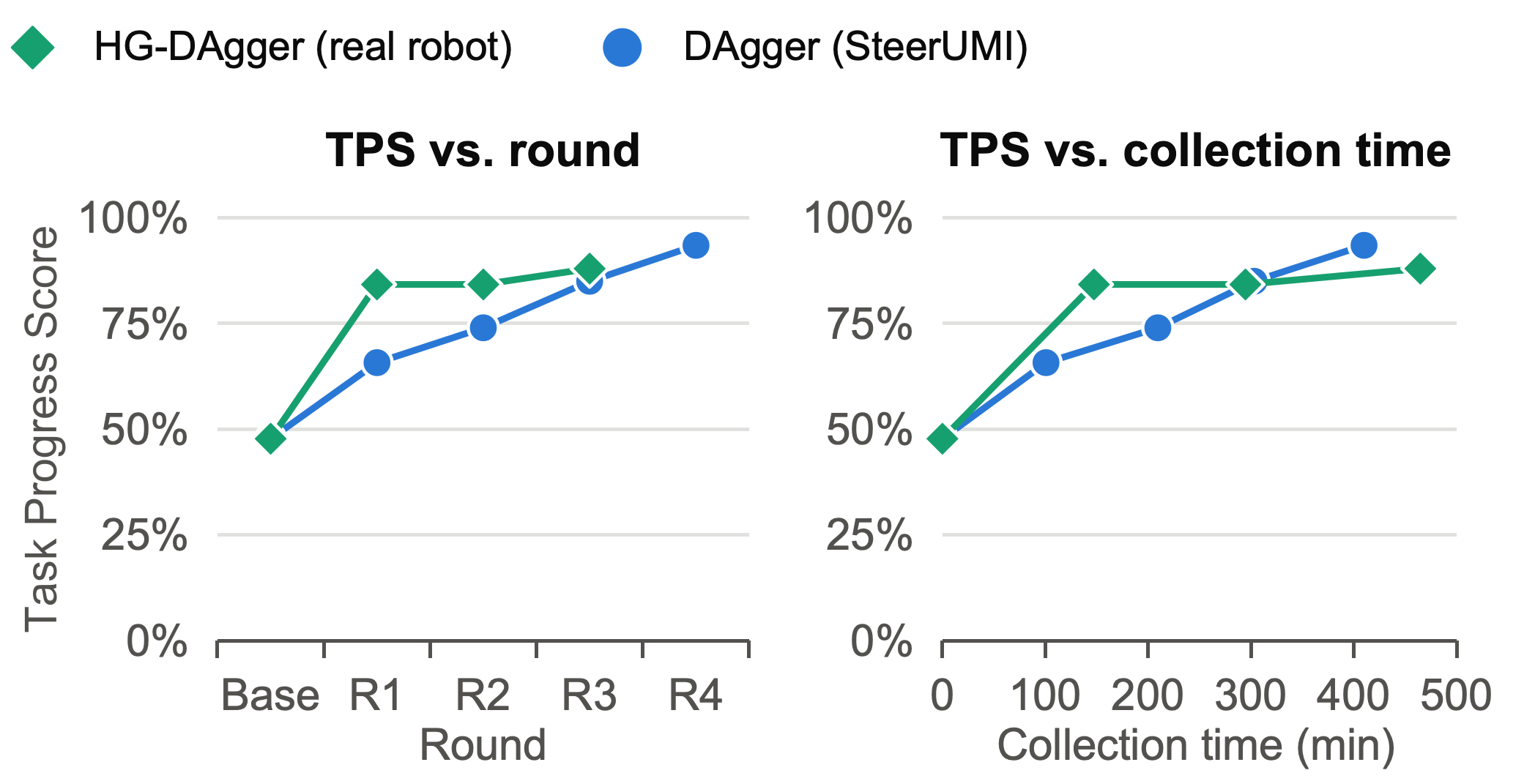
Compared with real-robot HG-DAgger on stack cubes, SteerUMI narrows the gap to 3.0 TPS points by the third round and reduces data collection time per training episode by 33.3%.
One UMI device vs. one robot · 100 training episodes per round, excluding setup time
Both settings keep the same OOD detector, starting model, and training-episode quota for each task. With AR off, operators do not see predicted trajectories or OOD markers and use their own judgment to correct the task.
Starting model and results after one post-training round · SR = success rate; TPS on a 0–100 scale
| Task | Starting model | OOD only (AR off) | OOD + AR |
|---|---|---|---|
| Fold clothes | 80% SR 84.5 TPS | 40% SR 67.5 TPS | 90% SR 91.5 TPS |
| Stack cubes | 40% SR 74 TPS | 15% SR 70 TPS | 55% SR 85 TPS |
04 / Citation
@misc{xu2026steerumi,
  title = {{SteerUMI}: Robot-Free Human-in-the-Loop Post-Training on Distributed {UMI} Devices},
  author = {Jiafeng Xu and Qi Li and Xinke Chai and Xiurui Guo and Xiaoqi Li and Xuanming Cheng
            and Xiang Li and Shaowen He and Hongfei Niu and Bingye Chen and Songpeng Zhang
            and Yifan Yang and Qian Zhu and Ran Cheng and Hao Dong},
  year = {2026},
}